
Sokcho as a Place of Waiting
Winter in SokchoThis flow traces Sokcho as a town whose residents and landscapes appear to wait for visitors, departures, spring, and political change.
increasing Bearing strength in each event
 decreasing
Bearing strength in each eventdecreasingWinter Visitors

Winter Visitors
A town out of season
In winter, Sokcho receives few tourists and little activity. People arrive at Old Park’s Guest House by chance, after drinking too much or missing the last bus.
The narrator knows the town as a place with long pauses between visitors.
Waiting made ordinary
The thin stream of guests makes waiting part of daily life rather than a temporary interruption. The town’s quiet mirrors the narrator’s uncertainty about whether she will stay or leave.
The Playmobil City
The Playmobil City
Seeing the roofs anew
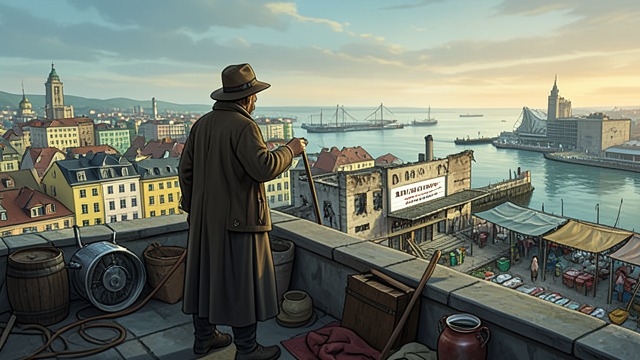
Yan Kerrand says Sokcho reminds him of a toy town with bright buildings. The narrator joins him on the roof and sees the corrugated roofs, ruined cinema, port, and fish market from above.
His comparison makes her look closely at a city she has rarely considered interesting.
A visitor’s perspective
The town becomes newly visible through an outsider’s description, though the narrator remains unsure that he understands it. His arrival briefly interrupts her habitual way of seeing home.
Waiting for Spring
Waiting for Spring
A season she recommends
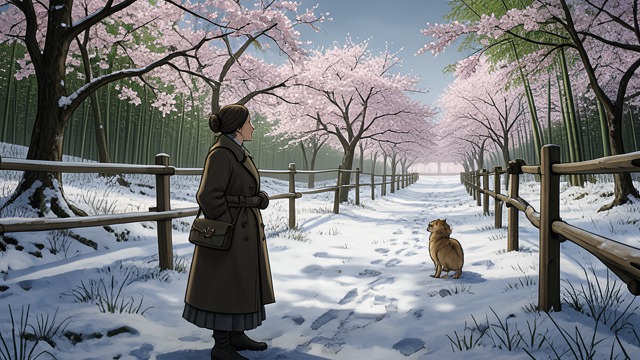
The narrator tells Yan Kerrand that winter is not interesting and that he should see Sokcho when cherry blossoms bloom and bamboo turns green. He replies that he will be gone by then.
He says he likes the landscape unadorned.
Different measures of beauty
Their exchange sets her expectation of seasonal change against his attention to the winter scene. Neither view is complete, and their disagreement makes the town’s waiting visible.
Sokcho Waiting
Sokcho Waiting
A city of pauses
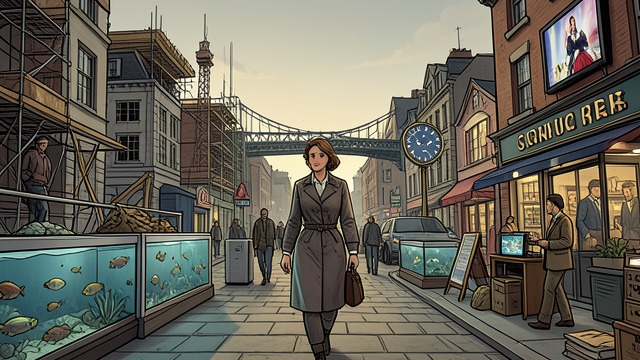
The narrator passes construction sites, fish tanks, a themed hotel, and the bridge associated with a television drama. She concludes that Sokcho waits for tourists, boats, men, and spring.
The town appears suspended between its everyday work and the arrivals it hopes will change its fortunes.
A personal landscape
The narrator’s image of the town also reflects her own life. She waits for opportunities and relationships that may not arrive, while remaining tied to the place she describes.
The Port’s Night Lights
The Port’s Night Lights
Boats prepared for departure
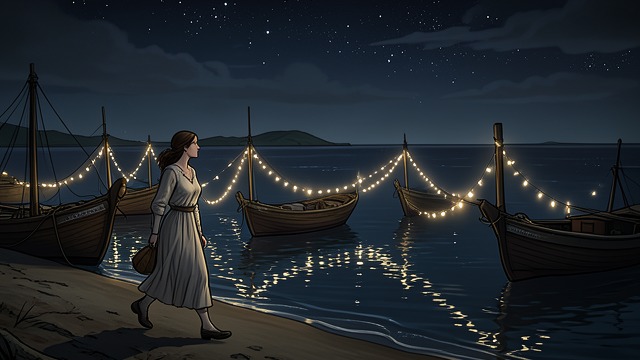
Each evening, the narrator walks to the port as fishermen prepare their boats to catch Squid. Lights are strung from bow to stern, attracting the animals from the dark water.
The boats leave in a slow procession beyond the shore.
A moving constellation
The narrator sees the lights as a Milky Way on the sea. The image briefly transforms waiting into collective movement, even as the town remains behind on shore.
At the beginning of the story
During the rain on the rooftop
During the walk in Seoraksan National Park
After the narrator’s mother receives her diagnosis
During the three days before Yan Kerrand leaves
